
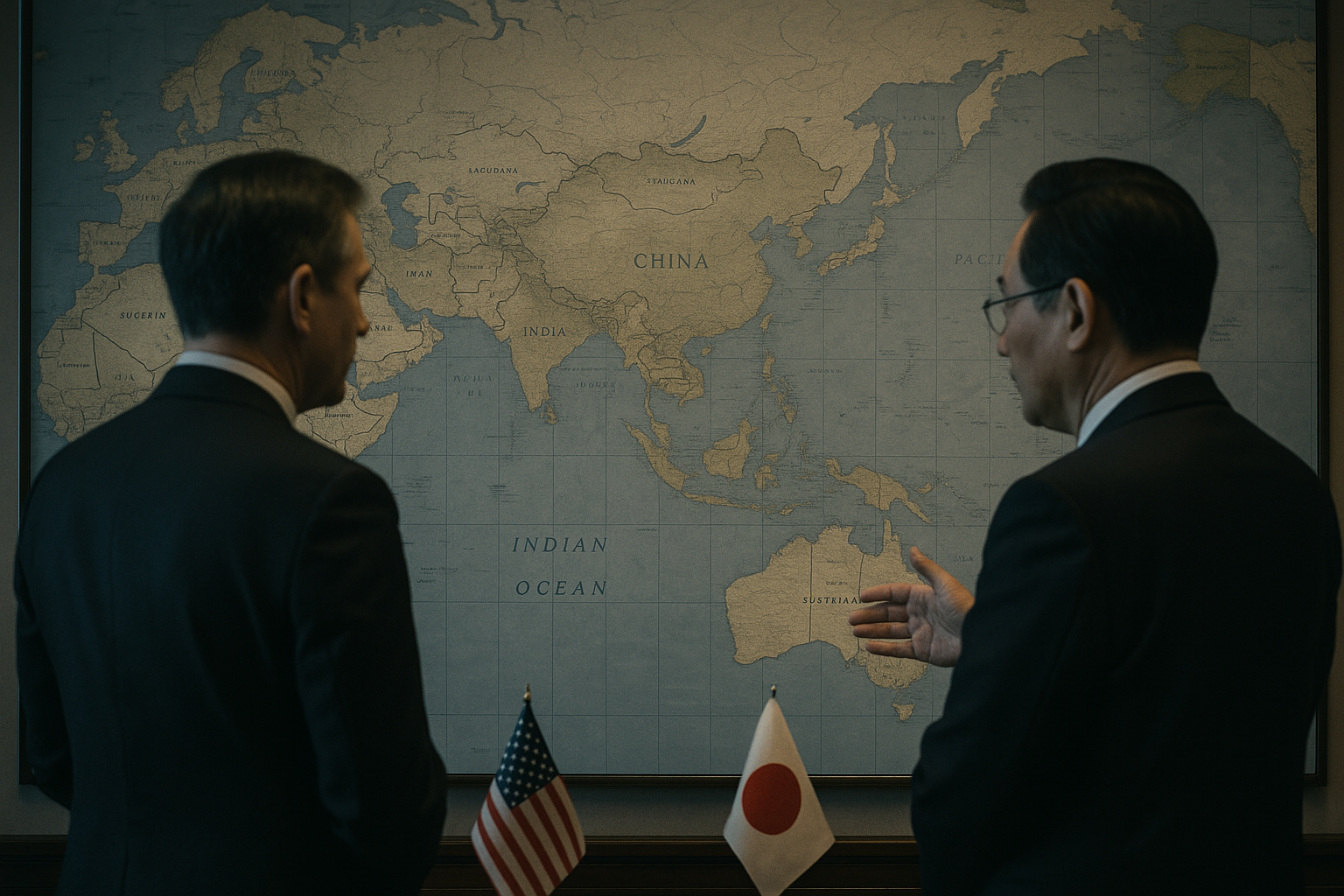
The Indo-Pacific region has emerged as a focal point of global strategic interest, driven by the intensifying competition among great powers and the region's growing economic and geopolitical significance. The evolving security architecture here is not merely a reflection of regional dynamics but also a bellwether for broader global stability.
At the heart of this transformation are shifting alliances and partnerships that seek to balance influence while promoting a rules-based order. Regional actors such as Japan, Australia, India, and ASEAN countries are recalibrating their security and diplomatic strategies in response to China's expanding maritime assertiveness and military modernization. This has led to a more interconnected framework of cooperation, including multilateral dialogues, joint military exercises, and enhanced intelligence sharing.
Extra-regional powers, notably the United States and the European Union, have also deepened their engagement through initiatives aimed at reinforcing security and economic resilience. The U.S. Indo-Pacific strategy emphasizes freedom of navigation, open sea lanes, and support for democratic governance, while the EU has increased its diplomatic presence and investment in regional infrastructure projects.
Economic partnerships complement these security arrangements, with frameworks like the Comprehensive and Progressive Agreement for Trans-Pacific Partnership (CPTPP) and the Indo-Pacific Economic Framework (IPEF) fostering integration and reducing vulnerabilities. These economic ties underpin the broader strategic objective of sustaining a stable environment conducive to growth and cooperation.
However, the complexity of the Indo-Pacific security architecture also presents challenges. Divergent national interests, historical tensions, and the risk of miscalculation require careful diplomacy and sustained dialogue. The delicate balance between deterrence and engagement remains critical to preventing escalation and ensuring that competition does not devolve into conflict.
In sum, the emerging security architecture in the Indo-Pacific is a dynamic mosaic of alliances and initiatives that reflect the region’s strategic importance. Its evolution will significantly influence global peace and stability, underscoring the need for thoughtful, inclusive approaches that accommodate the interests of all stakeholders while upholding international norms.